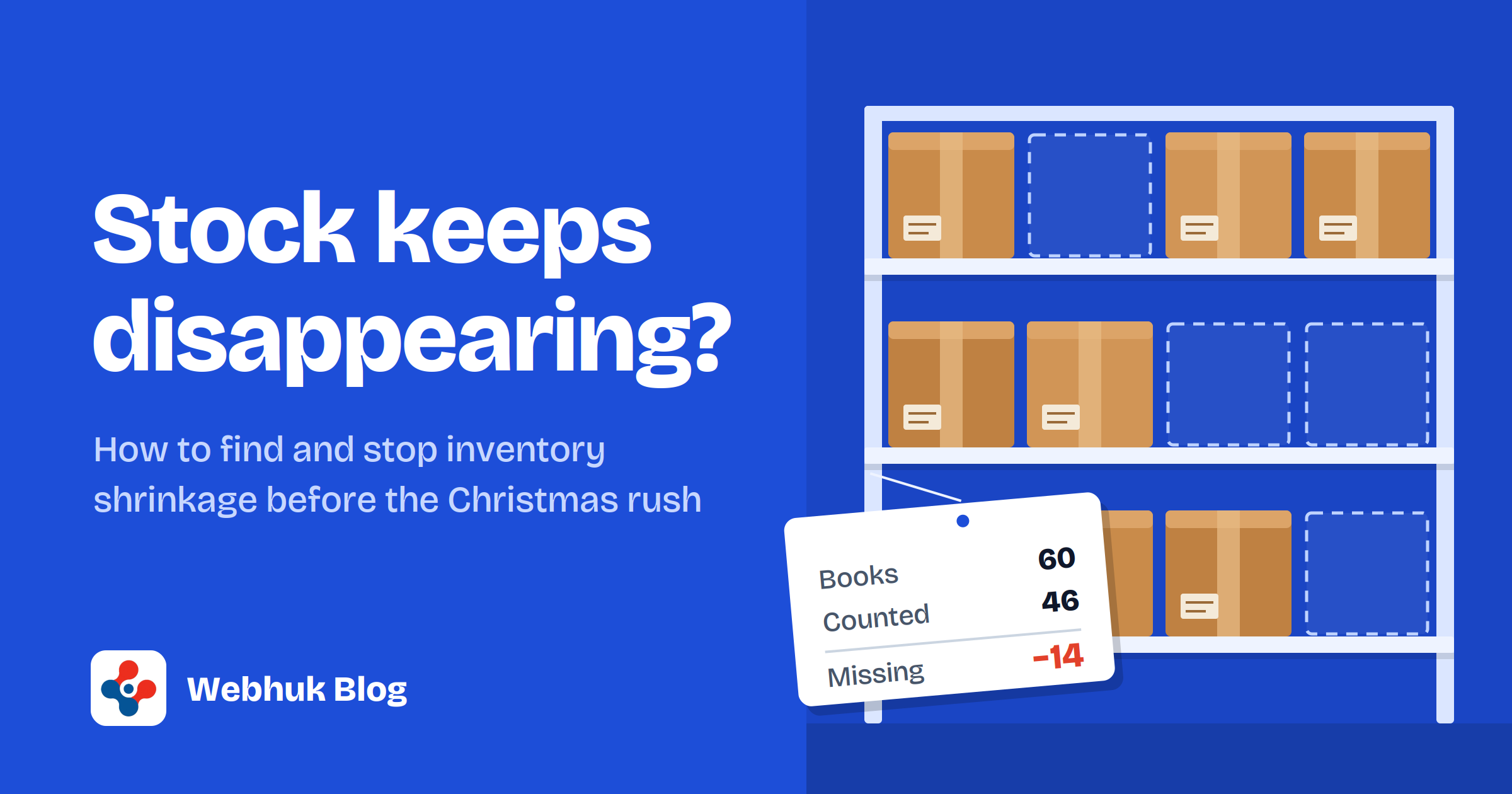
A provisions wholesaler in Kumasi does a stock count on a Sunday afternoon. The books say 60 cartons of evaporated milk. The storeroom has 46. Nobody sold 14 cartons without recording it. Nobody remembers a damaged delivery. The storekeeper says the count last month was fine, and the sales girl says she only sells what's in front of her.
So the owner does what most owners do. They sigh, adjust the number to 46, and move on.
That adjustment is a loss being written into the books quietly, month after month, until it becomes "just how business is." This guide covers what inventory shrinkage actually is, how to measure it, where it really comes from (it's not always theft), and how to close the gaps before October to December, when shrinkage in most trading businesses gets worse, not better.
What Shrinkage Is (and Isn't)
Shrinkage is the gap between the stock your records say you have and the stock you physically have. It covers everything that leaves the business without being sold or properly recorded.
Here's the point most owners miss: shrinkage is not the same as theft. Theft is part of it, sometimes a big part. But in many SMEs, a large share of missing stock comes from something more ordinary: goods that were never received properly, moved without a record, damaged without a write-off, or sold under the wrong item code.
This matters because the fix for each cause is different. If you treat every gap as theft, you damage staff morale and still don't solve the half of the problem that was really paperwork.
How to Measure It
The calculation is simple:
Shrinkage % = (Recorded stock value − Counted stock value) ÷ Recorded stock value × 100
Say your system shows GHS 250,000 of stock, and a full count finds GHS 236,500. That's GHS 13,500 missing, or 5.4% shrinkage.
Now here is the number that should keep you up at night. If your average gross margin is 25%, you have to sell GHS 54,000 of extra goods just to earn back the GHS 13,500 you lost. Shrinkage doesn't cost you the value of the stock. It costs you the sales it takes to replace that value.
Two notes to make the number honest:
- Value at true cost. For imported goods, that means landed cost, not the supplier invoice price. Otherwise you'll understate every loss.
- Measure per branch and per category. A 2% overall figure can hide 9% at one location or in one product line. The average protects the problem.
Where the Stock Actually Goes
1. Receiving errors. A supplier invoices 100 units and delivers 94. Nobody counts against the purchase order, so the system records 100. Six units are "lost" before they ever reach a shelf, and the loss will be blamed on someone in the shop months later.
2. Unrecorded transfers. Branch A runs short, so someone sends ten cartons over from Branch B "and we'll record it later." Later never comes. Branch B shows a loss, Branch A shows a surplus, and the business thinks it has a theft problem at one location and a counting problem at another. If you run more than one location, multi-location stock tracking is where this gets solved.
3. Damage and expiry nobody writes off. A dented tin gets set aside, a carton gets wet in the rain, a batch expires in the corner. The goods are physically gone or unsellable, but the records still count them. Closely related is dead stock: items that are technically there but will never turn into cash.
4. Recording mistakes at the point of sale. The customer buys the 5kg bag and staff key in the 2kg bag. One item shows a shortage and another shows a surplus. It looks like two problems but is actually one habit.
5. Theft, internal and external. Shoplifting happens. So does stock leaving through the back door: goods given to friends "on credit" with no invoice, items set aside and never paid for, sales made and cash pocketed with no record. Internal theft is harder to talk about, but it's usually the more expensive of the two, because staff know exactly where your controls are weak.
How to Find Where It's Happening
Stop relying on one big count a year. An annual count tells you that stock went missing, but by then it's far too late to learn when or how. Use cycle counting instead: count a small set of items every week, and rotate through the full range over the month.
Count your riskiest items most often. Prioritise high-value items, fast movers, and anything small enough to fit in a bag. These ten or twenty products usually hold most of your exposure.
Look for patterns, not culprits. Does the gap show up at one branch? In one category? After deliveries? On certain shifts or weekends? Patterns point to a process failure far more often than to a person, and the process is what you can fix permanently.
Reconcile cash against sales daily. If sales records and cash in hand don't match, you have a gap that will eventually show up in stock too.
How to Stop It
Receive against the purchase order, every time. Count goods on arrival, compare them to the order and the supplier's delivery note, and record the actual quantity. Get discrepancies signed by the driver before they leave. This one habit prevents a surprising share of "missing" stock.
No movement without a document. Every transfer, write-off, return and sample needs a record in the system at the time it happens, not "later."
Separate duties. The person who sells stock should not be the same person who can adjust stock numbers. When one person can do both, you have no control, only trust.
Make adjustments require approval. Stock adjustments are the easiest way to hide a loss. They should need a reason and a second person's sign-off, and they should leave a trail. Our guide on giving staff system access without losing control covers how to set up roles so your team can work freely without anyone being able to quietly edit the past.
Physically protect what matters. Keep high-value items behind the counter or in a locked store, limit who holds the storeroom key, and keep deliveries away from the customer area.
Tell your team what you're doing and why. Good staff welcome clear controls, because controls protect them from suspicion when stock goes missing.
Why This Matters More in October to December
The Christmas season is when shrinkage peaks. Volumes are high, deliveries come in fast and get rushed, temporary staff join who don't know the processes, and everyone is too busy to count anything. If your controls are loose in September, the festive season will expose that at the moment you can least afford it.
If you're already working through our Christmas readiness guide, add these steps to the list.
A 30-Day Shrinkage Plan Before the Rush
Week 1: Get a baseline. Do a full physical count per branch, value it at true cost, and calculate your shrinkage percentage. Write it down. This is the number you're going to beat.
Week 2: Fix receiving and transfers. Introduce counting against purchase orders and signed delivery discrepancies. Ban unrecorded transfers between branches, with no exceptions.
Week 3: Lock down adjustments. Separate selling from adjusting, require approval for write-offs and adjustments, and clear out the backlog of damaged and expired goods with proper write-offs.
Week 4: Start cycle counting. Pick your top 20 risk items and count them weekly. Compare the results to the system, investigate the gaps, and add your shrinkage figure to your monthly business review.
By November, you'll know your number, and you'll know where the gaps come from.
How Webhuk Helps
Shrinkage thrives where stock moves without records and records can be changed without a trail. Webhuk is built to close both gaps:
- Inventory Management shows stock by branch, enforces discipline on every movement, and sends alerts, so transfers and write-offs are recorded when they happen.
- Security & Administration gives you roles, approvals and audit trails, so selling and adjusting can sit with different people, and every change shows who made it and when.
- Landed price calculation keeps your stock valued at true cost, so your shrinkage figure is accurate rather than flattering.
- Dashboards let you compare branches and categories, so patterns show up in weeks rather than at year-end.
Plans start from 80 GHS per user per month, with a 14-day free trial. If you start now, you can go into the Christmas season with a clean baseline and controls already in place.
The Bottom Line
Missing stock is rarely one big event. It's small, quiet losses that nobody records: short deliveries, unrecorded transfers, unwritten-off damage, miskeyed sales, and occasionally theft. Measure it honestly, count your risky items often, make every movement leave a record, and separate the person who sells from the person who adjusts.
You can't get shrinkage to zero. But you can stop treating it as the cost of doing business, and every cedi you keep from disappearing is a cedi you don't have to sell GHS 4 of goods to earn back.
Start a 14-day free trial
Frequently Asked Questions
What is inventory shrinkage?
It's the difference between the stock your records show and the stock you physically have. It's caused by theft, receiving errors, unrecorded transfers, damage or expiry that was never written off, and mistakes when recording sales.
What is a normal shrinkage rate for a small business?
It varies a lot by industry, product type and how strong your controls are. The number that matters more is your own rate over time. Measure a baseline, then track whether it goes down month by month and branch by branch.
How do I know if staff are stealing stock?
Look for patterns before you look for people. Check whether losses cluster at one branch, one shift, one category or one person's access. Separating selling from stock adjustments, and requiring approval for adjustments, makes internal theft much harder and much easier to trace.
How often should I count my stock?
Do a full count at least once or twice a year. Alongside that, use weekly cycle counts of your highest-value and fastest-moving items. Frequent small counts catch problems while they can still be traced.
Should I value missing stock at cost or selling price?
Value it at cost, and for imported goods, at landed cost. Then remember the real impact: at a 25% margin, you need to sell four times the lost value just to recover it.
Can software stop shrinkage completely?
No. Software can't stop someone walking out with a carton. What it can do is make every movement leave a record, restrict who can change stock numbers, and show you exactly where and when gaps appear, which turns an invisible loss into one you can fix.