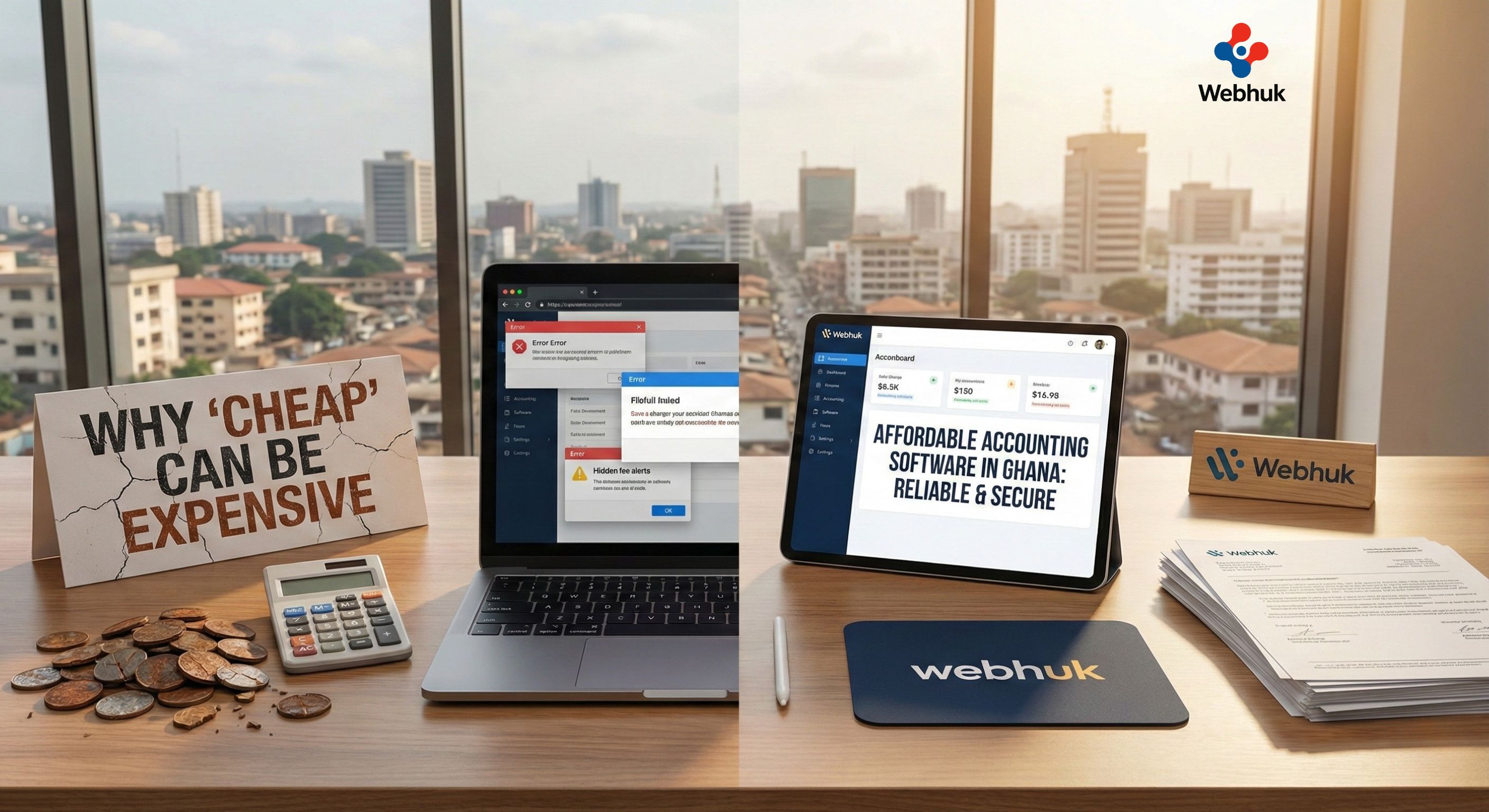
In Ghana, "cutting your coat according to your cloth" is a golden rule of business.
As an SME owner in Accra or Kumasi, you are constantly watching your overheads. Rent is increasing, fuel prices fluctuate, and imports are tied to the Dollar. It is natural to look for the cheapest possible solution when it comes to managing your books.
You might be tempted by software that costs GH₵ 50 a month—or even free apps.
But here is the hard truth: Price is what you pay; value is what you get.
Choosing the wrong affordable accounting software in Ghana can actually cost you millions in lost inventory, tax penalties from the Ghana Revenue Authority (GRA), and uncollected debts.
In this guide, we will break down what "affordable" really means for a Ghanaian business, and how to choose a tool that saves you money without cutting corners.
The Hidden Costs of "Cheap" Software
When you choose software based solely on the lowest price tag, you often miss out on the features that protect your revenue.
1. The "Single User" Trap
Many cheap packages limit you to one user. This means if you are the owner, you have to share your password with your accountant or your sales girl. This is a security risk. A robust system allows multiple users with different permissions, protecting your sensitive data.
2. Lack of Multi-Currency Support
If you import goods from China or Europe, you pay in USD or RMB but sell in Cedis. Cheap software often handles only one currency. This forces you to do manual calculations for every shipment, leading to errors in your "Landed Cost." A professional system handles these conversions automatically, essential for accurate inventory management best practices.
3. Non-Compliant Invoices
The GRA has specific requirements for VAT invoices. International "free" apps often use generic templates that don't meet these local standards. Using compliant software ensures you don't face penalties later during an audit.
What True "Affordability" Looks Like
Affordable software isn't just about a low monthly fee. It's about ROI (Return on Investment).
If a software costs GH₵ 200 a month but saves you GH₵ 2,000 in wasted stock and unbilled services, it is effectively free. It pays for itself.
Automating the Mundane
Time is money. If you are spending your Friday nights manually typing invoices, you are losing money. Good software automates this. It can convert a quote into an invoice in one click, helping you get paid faster. For service businesses, this automation helps reduce unbilled hours, ensuring every minute of work is charged for.
Preventing "Leakage"
Employee theft and administrative errors are silent killers of Ghanaian SMEs. A good accounting system integrates with your operations. It allows you to automate your purchase orders so you can approve every Cedi spent before it leaves your account. If you can’t verify it, you shouldn't buy it.
Real-Time Financial Health
Can you afford to pay your suppliers next week? Cheap tools only show you a list of transactions. Professional software gives you a Dashboard. It helps you understand the critical difference between cash flow vs profit. You might be making a profit on paper, but if your cash is tied up in stock, you need to know now, not at the end of the month.
Cloud vs. Desktop: Which is More Affordable?
In the past, buying a software license for GH₵ 5,000 felt like an "asset." But desktop software is a liability.
- Upfront Cost: High initial investment.
- Maintenance: You pay for IT guys to fix it when it crashes.
- Risk: If the computer is stolen, your data is gone.
Cloud Accounting is the modern standard for affordable accounting software in Ghana.
- Subscription: Low monthly fee (pay as you go).
- Updates: Free and automatic.
- Accessibility: Access your data from your phone via MTN or Vodafone networks, anywhere in the country.
Making the Right Choice for Your Growth
Don't stay small by thinking small.
Your accounting software is the foundation of your business. If you build on a cracked foundation (cheap, limited tools), you cannot add a second story (growth).
Look for a solution that offers:
- Local Relevance: Understands VAT, NHIL, and Withholding Tax.
- Scalability: Starts with simple invoicing but allows you to add streamlining production or inventory modules later.
- Support: Has a team that understands the African business context.
Conclusion: Invest in Value
Finding affordable accounting software in Ghana is about finding a partner for your success.
Stop struggling with spreadsheets that hide your true financial position. Upgrade to a system that gives you clarity, control, and compliance without breaking the bank.
Ready to take control of your finances? Webhuk offers a powerful, affordable solution tailored for growing African businesses. Start streamlining production and finances today.
Frequently Asked Questions (FAQs)
1. What is the average cost of accounting software in Ghana?
Prices vary widely, but for a cloud-based solution suitable for SMEs, you can expect to pay anywhere from GH₵ 100 to GH₵ 500 per month depending on features and users.
2. Can I use mobile money with accounting software?
Yes, many modern accounting platforms allow you to record payments received via Mobile Money (MoMo). While direct integration varies, you can easily track these transactions as a "Cash/Bank" account in the system.
3. Is my data safe if the internet goes off?
Cloud software requires internet to sync, but your data is stored on secure international servers. If your internet cuts out, your data remains safe. You simply log back in when the connection is restored.
4. Do I need an accountant if I have this software?
Software doesn't replace an accountant; it makes them more efficient. Instead of paying your accountant to do data entry, you pay them to review your reports and offer strategic advice, which is better value for money.
5. Can I manage stock and accounting in the same app?
Yes, if you choose an "Integrated" solution like Webhuk. Standalone accounting apps often lack good inventory tools. An integrated system tracks stock levels and financial value simultaneously.