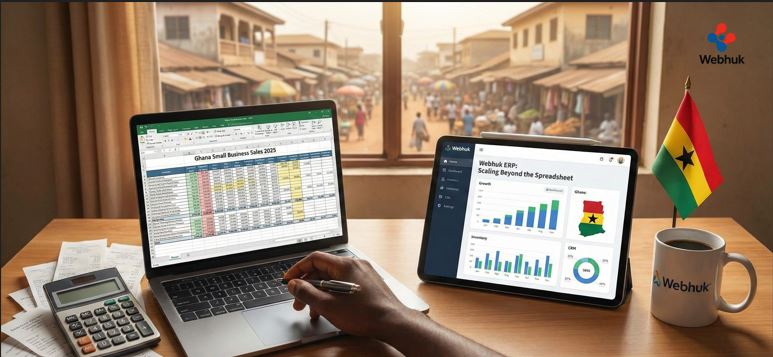
From the bustling markets of Makola to the tech hubs in Accra and the manufacturing zones in Tema, Ghanaian Small and Medium Enterprises (SMEs) are moving away from manual ledger books. The days of tracking sales in a notebook or relying on a disconnected Excel file are fading.
However, finding the best ERP for small business in Ghana presents unique challenges. You need software that understands the local context—fluctuating exchange rates, the specific needs of the Ghana Revenue Authority (GRA), and the reality of internet connectivity.
Global giants often feel too expensive or too rigid for the agile Ghanaian market. You need a solution that balances power with simplicity.
In this guide, we will explore what Ghanaian businesses should look for in an ERP and how the right tool can transform your operations from chaotic to streamlined.
Why Ghanaian SMEs Are Switching to ERP
If you run a business in Ghana, you know the "Cedi Headache." Prices change, import duties fluctuate, and keeping track of your true profit margin is a daily battle.
An ERP (Enterprise Resource Planning) system brings sanity to this process by connecting your Inventory, Sales, and Accounting into one platform.
1. Mastering Inventory in Real-Time
Whether you are importing electronics or manufacturing local textiles, stockouts are a disaster. If a customer walks into your shop in Kumasi, you need to know instantly if the item is in your warehouse in Accra. An ERP provides real-time visibility. It helps you apply inventory management best practices, ensuring that you sell your oldest stock first (FIFO) to avoid spoilage or obsolescence—critical for traders in our humid climate.
2. Controlling Costs and Leakage
"Leakage" (unaccounted stock or money) is a major issue for growing businesses. When processes are manual, it is easy for items to "disappear" or for purchases to be made without approval. The right ERP allows you to automate your purchase orders. You can set strict limits: “Any purchase over GH₵ 5,000 needs the Director’s approval.” This stops uncontrolled spending before it drains your working capital.
3. Streamlining Local Manufacturing
Ghana’s "One District, One Factory" initiative has spurred a wave of local production. But manufacturing requires more than just raw materials; it requires timing. An ERP assists in streamlining production by tracking your Bill of Materials. It ensures you have enough raw materials to meet your production targets, so your factory never sits idle waiting for supplies.
Key Features to Look for in Ghana
When evaluating software in the Ghanaian market, generic features aren't enough. You need specific capabilities.
Multi-Currency Support
Many Ghanaian businesses trade internationally. You might buy raw materials in USD or RMB but sell in GHS. The best ERP for small business in Ghana must handle these conversions automatically, giving you accurate financial reports without manual math.
GRA & Tax Compliance
Tax laws change. You need a system that can generate invoices that are compliant with VAT/NHIL regulations. Using a digital system simplifies your filing returns because every transaction is recorded exactly as it happened.
Mobile Accessibility
In Ghana, business happens on the go. You might be in traffic on the George Walker Bush Highway or visiting a client site. You need a cloud-based ERP that works on your smartphone, allowing you to check cash flow vs profit or approve an invoice from anywhere.
The Problem with "Free" or "Offline" Software
Some businesses try to save money by using free, offline desktop software. This is often a mistake in the long run.
- Data Security: If your office laptop is stolen or crashes due to power fluctuations (dumsor), your entire financial history is gone. Cloud ERPs back up your data automatically.
- Collaboration: Offline software locks data to one computer. If your accountant needs to see the books, you have to email files. An integrated cloud ERP allows your team to work together—salespeople can bill clients to reduce unbilled hours, while the finance team tracks payments instantly.
Choosing the Right Partner
Don't just buy software; buy a partnership. Global software companies often have zero support presence in Africa. If you have a problem, you are stuck chatting with a bot in a different time zone. Look for a provider that understands the African market context—someone who knows that internet can be intermittent and that mobile money is a key payment method.
Conclusion: Digital Transformation is Now
The Ghanaian market is becoming more competitive every day. Businesses that stick to manual books will be outpaced by those that embrace digital efficiency.
Implementing the best ERP for small business in Ghana is an investment in your peace of mind. It gives you the control to navigate currency shifts, the visibility to grow your inventory, and the freedom to focus on strategy rather than paperwork.
Ready to modernize your Ghanaian business? Discover how Webhuk offers the tailored, robust tools you need to manage everything from inventory management to production, right here in the local context.
Frequently Asked Questions (FAQs)
1. Does cloud ERP work well with Ghana's internet connectivity?
Yes. Modern cloud ERPs are designed to be "lightweight," meaning they don't require high-speed fiber to run. Many also have mobile apps that work well on standard 4G mobile data, which is widely available across Ghana.
2. Can the ERP handle transactions in both Cedi and Dollars?
Absolutely. Multi-currency capability is a standard feature in professional ERPs like Webhuk. You can invoice in Cedis, track expenses in Dollars, and the system will handle the exchange rate conversions for your reporting.
3. Is it difficult to migrate from Excel to an ERP?
No. Most ERPs have "Import Wizards" that allow you to upload your customer lists, item lists, and current stock levels directly from Excel spreadsheets. This makes the transition smooth and quick.
4. How does an ERP help with GRA tax compliance?
An ERP keeps a perfect digital record of every sale and purchase. When it’s time to file your VAT returns, you can generate a report that shows exactly what you collected and what you paid, reducing errors and making tax time stress-free.
5. Is ERP software expensive for a small Ghanaian business?
It is more affordable than you think. Cloud ERPs operate on a monthly subscription model, so you avoid the huge upfront cost of buying servers. The cost is often covered by the savings you make from reducing theft, waste, and administrative errors.