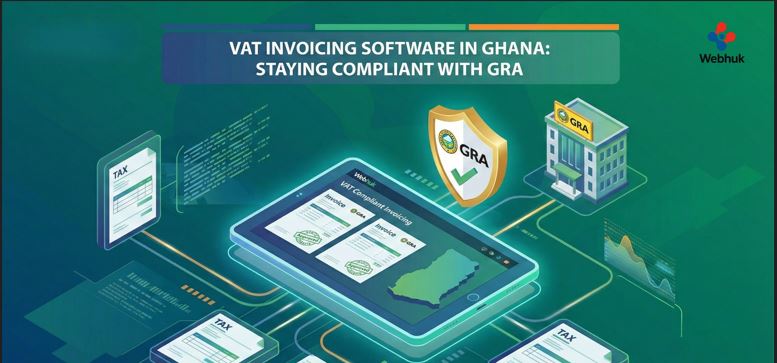
If you walk into any shop in Accra today, you might notice a small but significant change on the receipts.
It’s not just a piece of paper anymore. It has a QR Code. It has a Commissioner-General's Invoice Signature. It has a Sales Data Controller (SDC) timestamp.
This is the new face of tax in Ghana. The Ghana Revenue Authority (GRA) is aggressively rolling out its Certified Invoicing System (E-VAT). The goal is simple: to plug revenue leaks and ensure that every VAT cedi collected from a customer actually makes it to the government.
For business owners, this shift is stressful. The manual VAT invoice book is effectively dead. If you are still writing invoices by hand or using software that isn't connected to the GRA, you are walking into a minefield of penalties.
In this guide, we will break down exactly what the new GST/VAT invoicing software Ghana requirements are, and how to upgrade your systems to stay safe, compliant, and efficient.
What is the E-VAT Mandate?
The E-VAT system is a digital initiative that links your invoicing software directly to the GRA’s servers.
In the past, you would issue an invoice, record it, and then file a return at the end of the month. Now, the GRA wants to see that transaction in real-time.
- Validation: Before you can print or email an invoice to a customer, your software sends the data to the GRA.
- Certification: The GRA validates the transaction and sends back a unique digital security stamp (the SDC code).
- Issuance: Your printer churns out a "Certified Invoice" containing this security code.
If your invoice does not have this code, it is not a valid tax invoice. Your customer cannot claim input VAT on it, and you are liable for sanctions.
The Cost of Non-Compliance
The GRA is not taking this lightly. Under the amended Value Added Tax Act, failure to issue a certified electronic invoice carries heavy consequences.
- Fines: You can be fined up to GH₵ 50,000 or three times the amount of tax involved (whichever is higher).
- Sealing of Premises: The GRA enforcement team actively locks up shops and offices that are found to be non-compliant.
- Reputation Damage: Having your office sealed with "GRA" tape is a PR disaster that is hard to recover from.
This is why finding the right GST/VAT invoicing software in Ghana is no longer just about "ease of use"—it is about survival.
Features of a GRA-Compliant System
Not all software is ready for this. Many international "free" apps do not have the API integrations required by the GRA. Here is what your software must do:
1. API Integration with GRA
Your system must be able to "talk" to the GRA server via the internet. It needs to send sales data securely and receive the validation token instantly (usually in milliseconds), so your checkout process doesn't slow down.
2. Offline Capability
We all know the internet in Ghana can be unstable. A robust system allows you to issue invoices offline. It stores the data locally and automatically syncs it with the GRA the moment your connection is restored. This ensures you never have to stop selling just because the network is down.
3. Proper Tax Configuration
Ghana’s tax structure is unique. You aren't just charging "15% VAT." You are charging:
- NHIL (2.5%)
- GETFund (2.5%)
- COVID-19 Health Recovery Levy (1%)
- VAT (15%)
Your software must calculate these levies correctly. If it bundles them all into one "Tax" line, your reporting will be wrong, and your monthly return will be rejected.
Beyond Compliance: The Business Benefits
While the mandate feels like a burden, switching to digital invoicing actually helps your business grow.
Automated Returns
Since the GRA already has your sales data, filing your monthly VAT return becomes incredibly fast. The figures are pre-populated. You just review and submit.
Input VAT Claims
When you buy from suppliers who also use certified software, your "Input VAT" (the tax you paid) is automatically logged in your favor. This ensures you never overpay tax because you lost a paper receipt.
Integration with Operations
The best invoicing software doesn't stand alone; it connects to your inventory. When you issue a VAT invoice, the system should deduct the stock immediately. This helps you maintain inventory management best practices and prevents you from selling products you don't have.
Choosing the Right Partner
Transitioning to E-VAT is technical. You don't want to figure out API keys and JSON files on your own. You need a software provider that:
- Is actively maintaining the GRA link. If the GRA changes their API (which they do), your provider must update the software immediately.
- Offers local support. You need someone to call if your printer stops generating QR codes.
- Is affordable. You shouldn't have to pay enterprise prices for compliance.
Conclusion: Don't Wait for the Enforcement Team
The GRA is moving phase by phase, but the net is tightening. Whether you are a large manufacturer or a growing service agency, E-VAT is your reality.
Don't view GST/VAT invoicing software in Ghana as a grudge purchase. View it as your digital shield. It protects you from penalties, streamlines your tax filing, and modernizes your business in one go.
Is your business GRA compliant? Webhuk’s invoicing solution is built for the Ghanaian market, ensuring every invoice you issue is perfectly calculated, certified, and secure.
Frequently Asked Questions (FAQs)
1. Is E-VAT mandatory for all businesses in Ghana?
It is mandatory for all VAT-registered entities. The GRA rolled it out in phases, starting with large taxpayers, but it is now expanding to Medium and Small taxpayers. If you charge VAT, you must use a Certified Invoicing System.
2. Can I use my old invoicing software?
Only if your old software provider has integrated with the GRA's API. If they haven't, you will need to switch to a compliant provider or use the GRA's manual portal (which is tedious for high-volume businesses).
3. What happens if I make a mistake on a Certified Invoice?
You cannot just "delete" a certified invoice because the GRA already has record of it. You must issue a Credit Note or Debit Note through the system to correct the error. This creates a transparent audit trail for the tax officer.
4. Do I need a special printer for E-VAT invoices?
Not necessarily. You need a printer capable of printing a clear QR code. Most standard thermal receipt printers or office laser printers work fine, provided your software can generate the code correctly.
5. How does this affect my Income Tax?
It helps! Because your sales are digitally recorded, your "Total Revenue" is clear. This makes filing your Corporate Income Tax (CIT) at the end of the year much smoother, as your sales records are undeniable and organized.