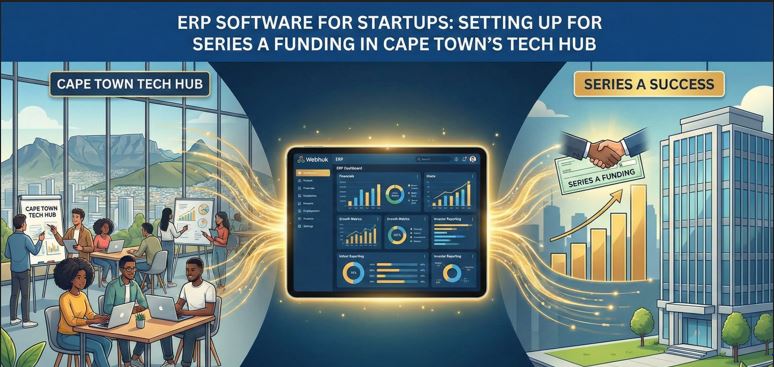
In the coffee shops of Woodstock and the co-working spaces of Stellenbosch, the dream is the same: Build a great product, get traction, and raise a massive Series A round to scale globally.
South Africa’s startup scene is booming. But for every success story, there are dozens of startups that fail—not because they lacked a good idea, but because they failed Due Diligence.
When a Venture Capitalist (VC) looks under the hood of your business, they don't just want to see code. They want to see control.
- "What is your exact Customer Acquisition Cost (CAC)?"
- "Show me your Churn Rate by cohort."
- "What is your current runway down to the day?"
If you have to spend three days cobbling these numbers together from Google Sheets and Stripe exports, you look risky.
This is why smart founders are adopting ERP software for startups much earlier than before. They are building the "operating system" of a unicorn from Day 1.
In this guide, we will look at why an ERP is your secret weapon for fundraising and how it helps you scale without the "growing pains" that kill promising companies.
The "Series A" Gap
Seed funding is about selling a vision. Series A is about selling a machine. Investors want to pour fuel into an engine that works. If your engine is held together by duct tape (manual spreadsheets, disconnected apps), they won't invest.
ERP software for startups bridges this gap by turning your chaos into a machine.
1. The "Single Source of Truth"
Startups often have data silos: Sales uses HubSpot, Dev uses Jira, Finance uses Xero. When an investor asks, "Is this customer profitable?", you don't know. You know the revenue (Sales), but you don't know the support costs (Dev). An ERP connects these dots. It shows you the full lifecycle of a customer, proving to investors that you understand your Unit Economics perfectly.
2. Passing the POPIA Audit
Data privacy is no longer optional. If you are handling customer data in Excel files saved on laptops, you are a compliance nightmare. VCs are terrified of liability. An ERP gives you a secure, encrypted, and audit-ready database. It shows you have "Enterprise-Grade" maturity regarding the Protection of Personal Information Act (POPIA), which boosts your valuation.
3. Managing the Burn Rate
Startups die when they run out of cash. "Uncontrolled Spend" is the silent killer—SaaS subscriptions nobody uses, AWS bills that spiral out of control. An ERP allows you to automate your purchase orders. You can set a rule: "Any expense over R1,000 needs approval." This discipline extends your runway, giving you more time to hit your milestones.
Why "Lean" Doesn't Mean "Manual"
The "Lean Startup" methodology is often potential misinterpreted as "don't buy software." But manual work is waste. If your Lead Developer is spending 5 hours a month helping Finance reconcile invoices, that is 5 hours they aren't shipping code.
ERP software for startups automates the boring stuff:
- Invoicing: Automatically triggers when a contract is signed.
- Revenue Recognition: Handles the complex accounting of SaaS subscriptions (e.g., recognizing annual payments over 12 months).
- Onboarding: Automates the HR flow for new hires.
This automation keeps your headcount low. You can scale to 100 customers with the same admin team you had at 10 customers.
Choosing the Right ERP for a Startup
You aren't Anglo American. You don't need SAP. Startups need agility.
1. Modular Architecture You might only need CRM and Accounting today. But in a year, you might need Inventory or HR. Choose an ERP that lets you "switch on" modules as you grow. Don't pay for bloat.
2. Open APIs Your ERP must talk to your product. If you are a Fintech startup, your ERP needs to pull transaction data from your app. Look for a system with robust APIs (Application Programming Interfaces).
3. Speed to Implement You cannot afford a 6-month implementation project. You need to be live in 2 weeks. Cloud-based ERPs are designed for rapid deployment.
Conclusion: Build for the Exit
Whether you plan to IPO or exit to a big tech giant, the end game is the same: you need a clean, transferable business.
A startup running on an ERP is easier to acquire. The data is clean, the processes are documented, and the financial history is auditable.
Don't wait until the Due Diligence email hits your inbox to fix your data. Implement ERP software for startups now, and build a foundation that investors can trust.
Ready to scale your startup? Webhuk provides the agile, API-ready business software that powers South Africa’s next generation of tech unicorns.
Frequently Asked Questions (FAQs)
1. Is ERP too expensive for a Seed-stage startup?
Not anymore. Cloud ERPs operate on a subscription model (SaaS). You pay a small monthly fee per user. The cost is often offset by the savings in not having to hire an admin assistant or bookkeeper to do manual data entry.
2. Does it handle SaaS metrics like MRR and Churn?
Yes. Modern ERPs designed for tech startups have dashboards specifically for subscription metrics. They can track Monthly Recurring Revenue (MRR), Churn, and Lifetime Value (LTV) automatically.
3. Can I take my data with me if I switch?
Yes. Data portability is key. You can export your data to standard formats (CSV, JSON) at any time. This prevents "Vendor Lock-in," which is a major concern for startups.
4. How does it help with remote teams?
South African startups often have teams distributed across Cape Town, Joburg, and remote areas. A cloud ERP gives everyone a single dashboard. Your remote sales team can close deals, and your remote finance lead can invoice them instantly.
5. Can I integrate it with Stripe or PayFast?
Yes. Integration with payment gateways is standard. When a customer pays via Stripe or PayFast, the ERP automatically records the revenue and reconciles the bank fees, saving hours of manual reconciliation.